
We scan everything.
And we do it once, the right way.
PHOTO & DOCUMENT SCANNING · PLAYA VISTA STUDIO
Not just scanning.
Your photos organized, renamed, and dated before it comes back to you.
Most families have decades of photos scattered across formats that are actively deteriorating. Printed photos fading in shoeboxes. Slides and negatives sitting in envelopes nobody has opened in years. Old photo albums with pages turning brittle. Documents — birth certificates, marriage records, military papers, letters — stored in conditions that won't preserve them much longer.
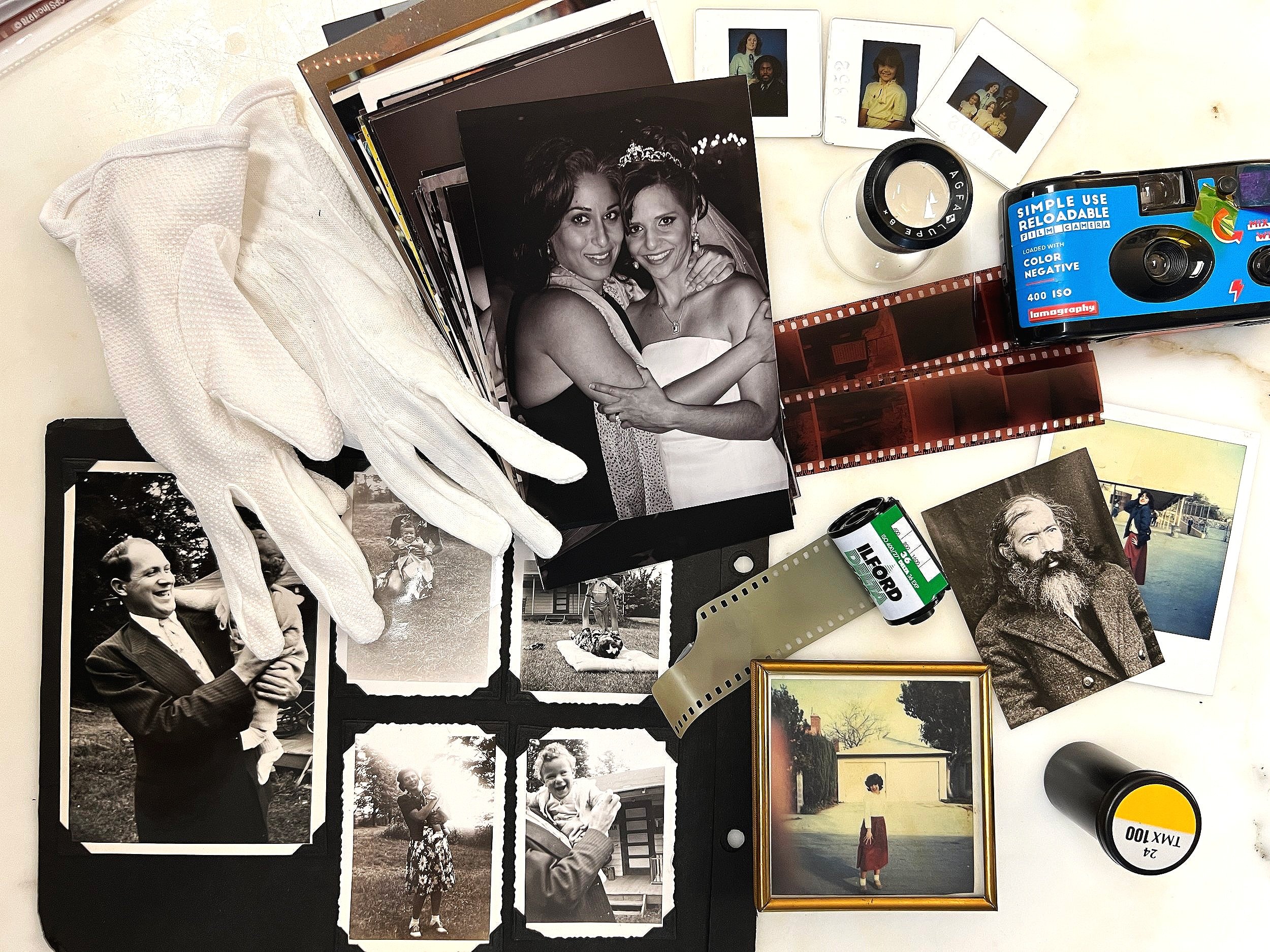
Professional photo scanning is the process of converting these physical memories into high-resolution digital files that are safe, searchable, and shareable. At Picturli, we scan printed photos, slides, negatives, film negatives, photo albums, scrapbooks, documents, and three-dimensional memorabilia — all at archival quality using the same camera scanning systems found in museums and archives worldwide.
Every project starts with organization, not scanning. We go through your collection first, remove duplicates and damaged photos that can't be saved, and build a chronological structure before a single photo touches our equipment. That's what separates professional photo archiving from a pile of digital files.
Then we scan. Photo prints are digitized at 600 PPI. Slides and negatives at 4,000 PPI — capturing more detail than any print made from them. Every file comes back renamed with a descriptive title, re-dated to reflect its original date, and tagged with family names and places. Your entire collection arrives organized chronologically and searchable on any platform, any device.
We serve families in Los Angeles and clients across the United States and internationally. Our studio is located in Playa Vista, California.
What We Scan
Every format you've ever heard of.
And some you haven't.
Negative or Print?
The negative holds more than the print ever showed.
Negatives are the original form of your photo. Prints are copies made from them, and they are often cropped, so parts of the picture never made it onto paper. Negatives also hold more detail, color depth, and tonal range. Here are the same moments, scanned both ways.
Faces are blurred to protect our clients' privacy.
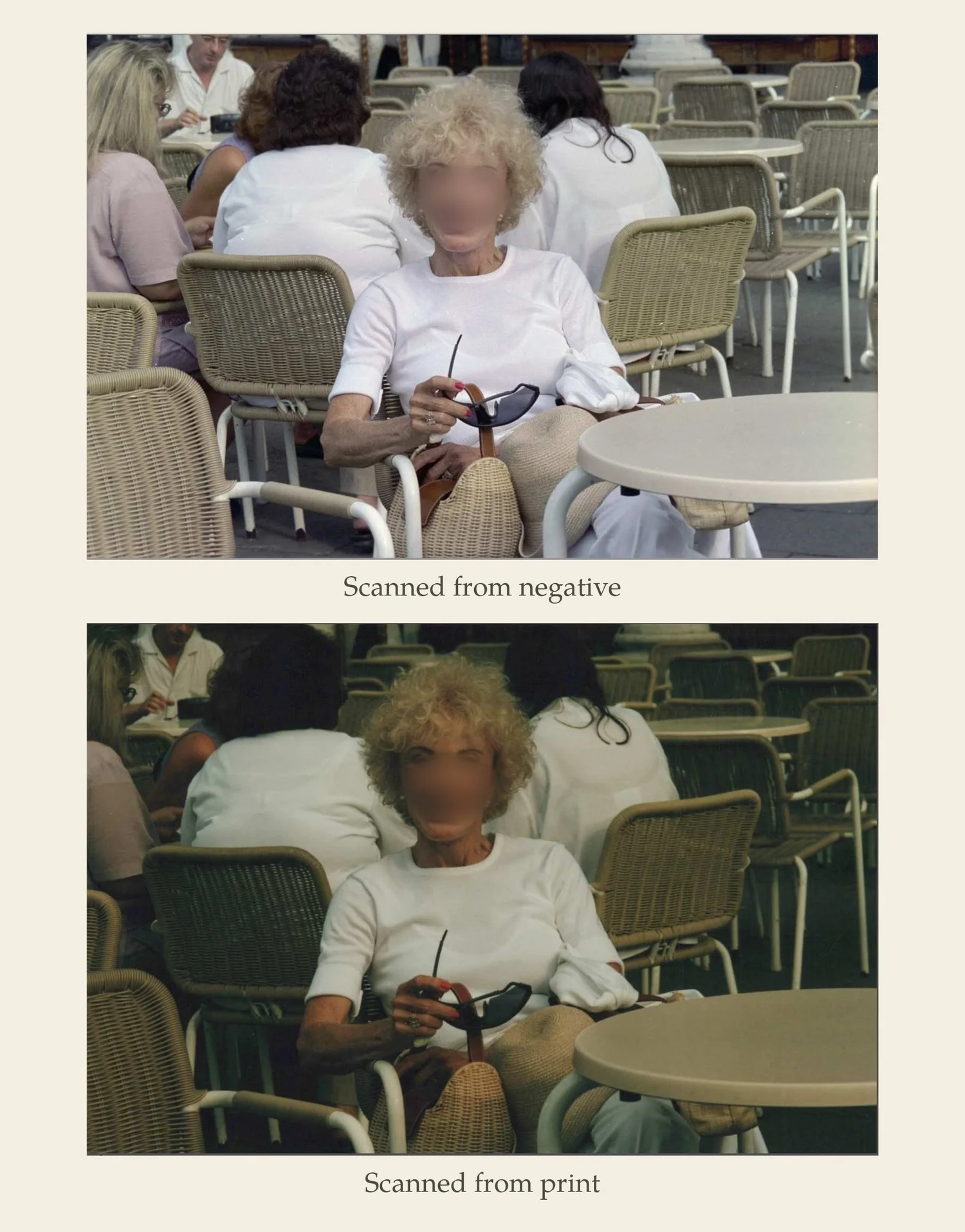
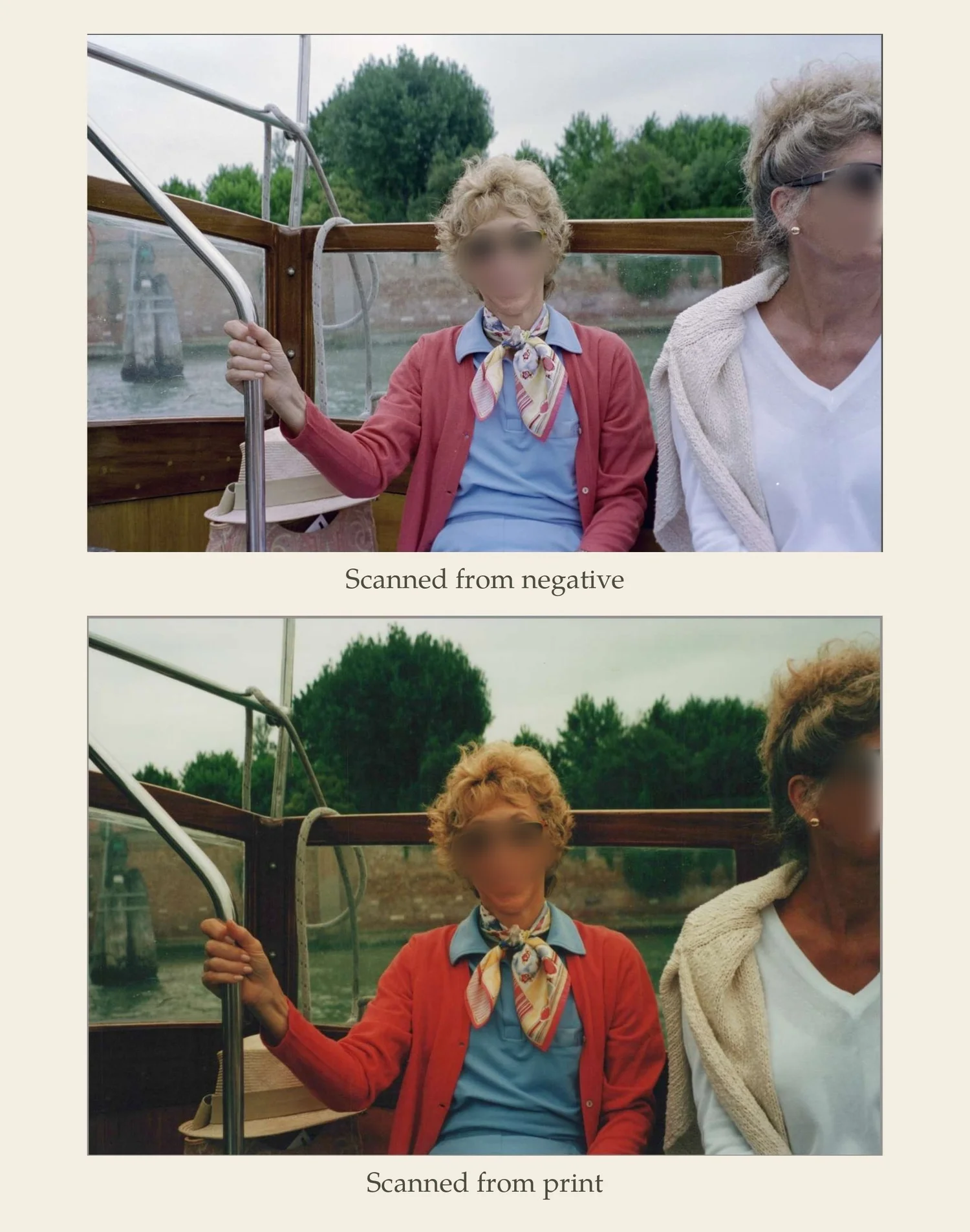
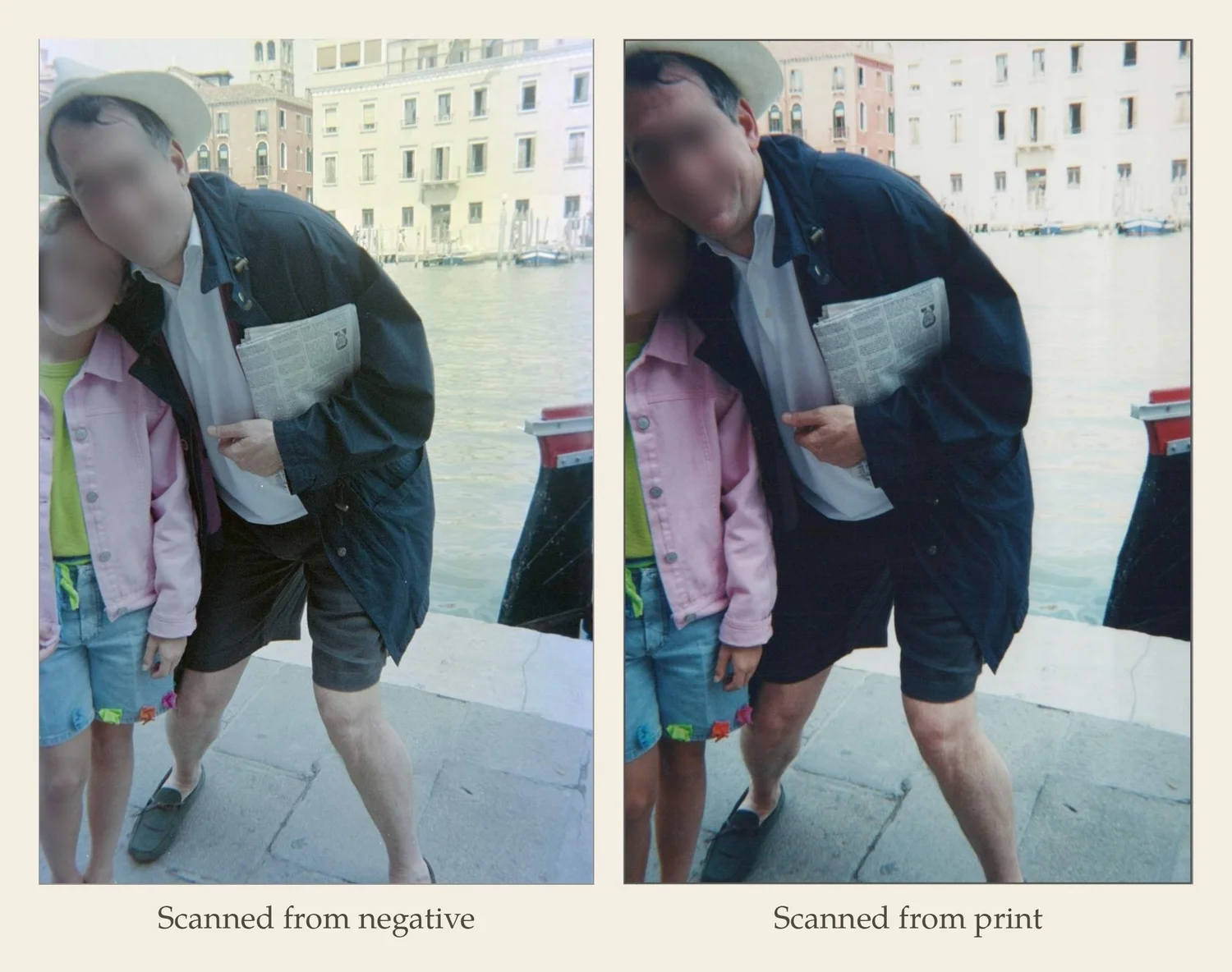
1 of 3
What happens after my photos are scanned?
Once your collection is scanned, organized, and tagged with names and places, we deliver everything on a USB drive or external hard drive. We also help you build a backup strategy — recommending online platforms where your archive is accessible from any device and shareable with exactly who you choose. We'll walk you through the options that fit your level of technology.
Questions
Photo scanning FAQ
Why should I digitize my photos?
Prints, albums, slides, and negatives fade and discolor from light, air, and humidity. They can be damaged by water, fire, or natural disasters, break down as their materials age, or be lost during a move.
Digitizing protects them. Your scanned photos are safe from physical damage, organized and searchable with dates and keywords, viewable on any device, and easy to share with family.
What is analog media?
Analog media is any traditional, non-digital format that captures images, sound, or video through a physical process. In photography, that includes film negatives, slides and transparencies, and prints made in a darkroom. Analog formats are timeless, but they fade and deteriorate over time, which is why we convert them into high-resolution digital files.
What photo formats do you scan?
Color and black and white prints, and instant photos from Polaroid, Fuji, Kodak, and other instant films. We also scan vintage formats, including daguerreotypes, ambrotypes, tintypes, real photo postcards, stereo cards and stereographs, cartes de visite, cyanotypes, and cabinet cards. See the complete list.
Should I scan the negative or the print?
When you have both, scan the negative. The negative is the original. Prints are copies made from it, and photo labs trimmed the edges of every print to fit the paper, so part of the picture never made it onto the print.
Negatives also hold more detail, color depth, and tonal range. Scanning them takes more work and costs more, but it gives you the fullest, truest version of each photo.
What resolution do you scan photos?
Prints are scanned at 600 PPI, ideal for fine detail and high-quality enlargements. Slides and negatives are scanned at 4,000 PPI. Every file meets archival standards and is suitable for anything from a small keepsake to a large-format print.
Do you offer different resolutions at different prices?
No. Our philosophy is to do it once and do it right, so we scan everything at one high-resolution standard, with the detail needed for viewing, printing, and long-term archiving.
Which negatives and slides do you scan?
35mm, 35mm half frame, 126, 127, 127 half frame, 110, disc film, APS, 116/616, 120/220/620, and delicate glass plates.
Each negative is inspected and handled with care, scanned at up to 4,000 PPI, and color corrected, with dust and scratches removed and exposure adjusted. You receive high-resolution JPEG or TIFF files.
How do you scan scrapbook and album pages?
You choose. We can scan each page as a whole, or carefully remove the photos and scan them individually. Either way, we protect your pages and keep the character of the original.
Can I make enlargements of a scanned photo?
Yes. Because we scan at high resolution, you can often enlarge a scan to three times its original size or more, depending on what you print it on.
Can you scan damaged photos?
Yes. We scan photos with tears, creases, cracks, and stains. For an important memory, we also offer professional photo restoration.
How do you deliver the digital files?
Smaller collections arrive on a USB drive, and larger collections on an external hard drive. We can also set you up on an online platform suited to how your family likes to view and share. See delivery options.