
What to Actually Do With Your Photos Once They're Organized
There's a moment that happens with almost every client after we finish a project.
The archive is complete. Everything is sorted, tagged, renamed, backed up. The chaos is gone. And then they open it for the first time and just… look. They find photos they'd forgotten existed. They see their parents at thirty. They find their kids at ages they can barely remember. And something shifts.
That shift is what this whole process is for.
But here's what I've noticed: a lot of people stop there. They get organized and then don't know what to do next. The library exists. Nobody's really using it.
That's the part I want to talk about.
Your archive is a resource, not a destination
An organized photo library isn't the end of the story. It's the beginning of what's possible.
When your photos are searchable in seconds, when you can type "Dad 1987" and find every photo of your father from that year instantly, you start using your collection in ways you never could before. You stop scrolling and start finding. You stop meaning to do things with your photos and actually do them.
That change in how you find your precious memories is what turns an archive into a living part of your family's life.
The most meaningful thing you can do: create something
The families I work with who feel most transformed by this process aren't the ones who just got organized. They're the ones who took that organized library and made something from it.
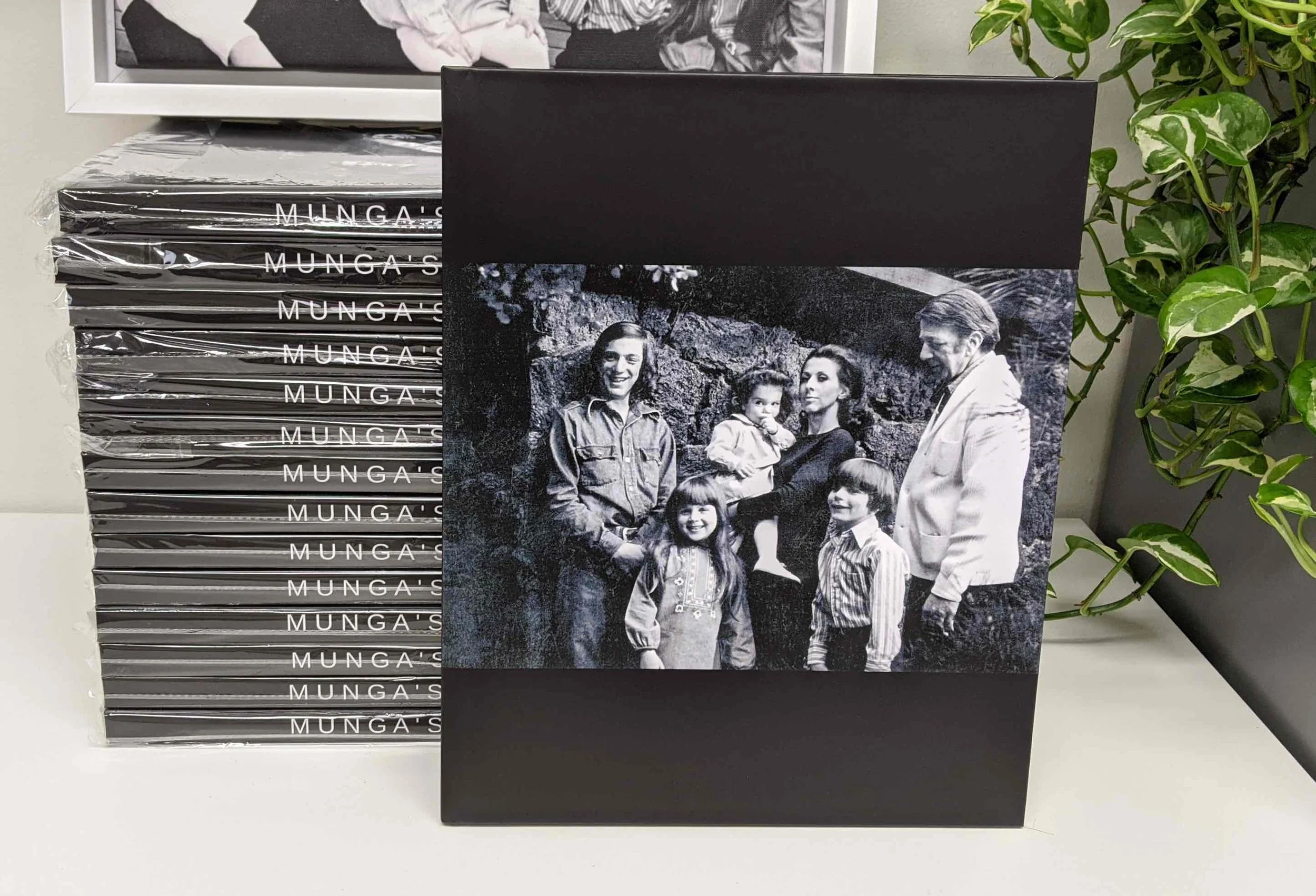
A custom photo book for a parent's milestone birthday. A gallery wall installation that tells the story of a family from the 1940s to now. A slideshow played at a wedding rehearsal dinner that made everyone cry in the best possible way. A private family website where cousins who've never met can see where they came from.
These aren't extras. They're the point. The archive is what makes them possible, but the creation is what makes the archive matter.
If you want to understand what these projects look like, I've put together resources on custom photo books, gallery wall installations, professional slideshows, and custom framed prints.
IMPORTANT: Upload your archive to a secure sharing platform
Before you make anything, get your library somewhere accessible.
A private family photo platform lets every member of your family, across generations, across devices, across time zones, access the archive from anywhere. They can search it, download from it, share from it. It becomes a shared family resource instead of a file that lives on one person's hard drive.
I use and recommend two platforms depending on what a client needs. SmugMug is excellent for families who want a beautifully designed private website with strong search capability. FOREVER is built specifically for long-term family memory preservation with a guaranteed storage model. Both are far more stable and private than consumer services like Google Photos or iCloud, and neither is going to change its terms or shut down the way Kodak Gallery and Costco Photos did. If you’d like to play around, you can sign up with FOREVER and receive a 2G for free. Here’s my affiliate link.
Use your archive to mark milestones
One of the most practical things an organized library enables is milestone projects, and there are always milestones coming.
Graduations. Weddings. Anniversary parties. Milestone birthdays. Memorial services. Retirement celebrations. Every one of these is an opportunity to pull from your archive and create something that honors the moment and the people in it.
The families who can do this quickly and beautifully aren't the ones with the most photos. They're the ones with the most organized photos. When you need a photo of your grandmother at her wedding, you find it in thirty seconds instead of three hours, or not at all.
Share what you find
This sounds simple, but it matters more than people expect.
As you go through your organized archive, you'll find photos that belong to other people. A photo of your aunt's children at ages no one has captured digitally before. A photo of a cousin's parents on their wedding day. A photo of a grandparent that a branch of the family has never seen.
Send them. Don't wait for a reason. The act of sharing an unexpected photo is one of the most meaningful things an organized archive makes possible -- and it costs nothing except the thirty seconds it takes to find the photo and send it.
What comes after sharing: maintain what you've built
An organized library requires ongoing attention. Not a lot -- but some. Read my post on how to keep your photo library from falling apart for the practical rhythm I recommend. And if you haven't read the full series from the beginning, start with how to do a complete family photo inventory -- the gather phase is where everything starts.
What we do at Picturli
We don't just organize. We build the archive and then help clients figure out what to do with it.
The design side of our work — photo books, gallery walls, slideshows, family websites — is where the archive becomes something people actually live with. Something they display. Something they give. Something that outlasts them.
If you're ready to find out what's possible with your collection, that conversation starts with a consultation.